

We are humans doing human- centered work.


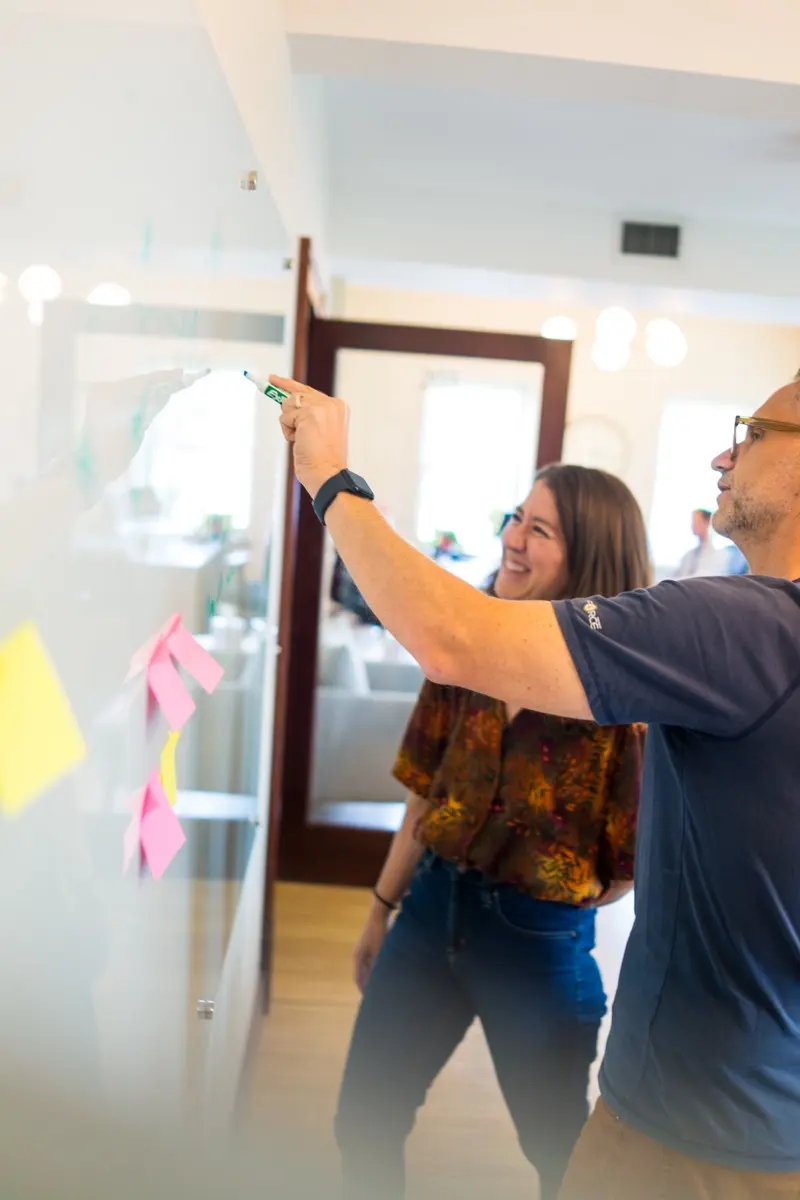

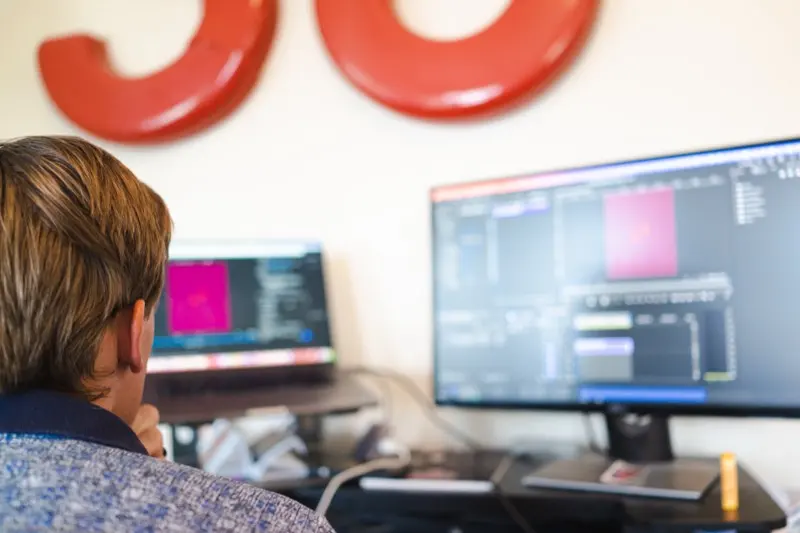

What’s the role of artificial intelligence for a team and a business whose guiding purpose is to see and serve people?
Our answer is rooted in curious exploration and continuous learning. We’re discovering more each day about how technology can help us evolve our ways of working while keeping human value and insight at the center of the work itself.
What we’re not doing is offloading, automating, or shortcutting the essential skills we bring to every project: Listening closely. Discerning what’s true and what’s possible. Building with clarity and imagination. Leaning into what matters deeply to our clients, the people they serve, and the world we share. These are fundamentally human pursuits.
How we use AI
Using any tool well means knowing what it’s for and where it falls short. These are some ways we’ve been using AI:
Organizing data
Sorting raw input so more time goes to deep thinking and human insight
Mapping context
Analyzing historical background and info to help root stories in firm ground
Rapid experimentation
Enabling fast, focused prototypes that help assess the promise of a new idea
Learning together
Sharing use cases with clients as they travel their own AI paths




Importantly, all of these practices allow room for everyone on our team to bring their whole selves to the work—their craft, intuition, probing questions, lessons learned, and appetite for invention. Every part of every story we unlock comes from what you’ve told us and what’s real about your organization, mission, and market.
How we don’t use AI
AI can support our core processes, but it doesn’t replace them. Because seeing and serving people is a human endeavor. These are some principles we hold to:
AI is not a writer.
It can help with iterative language and structure, but the writing of original thoughts is always grounded in human intelligence and craft.
AI is not a designer.
It can help explore visual directions and references, but meaningful design comes from human taste and intention.
AI is not a thought partner.
It can be a sandbox for testing and reacting to ideas, but it is not a creative peer. Creative decisions are made by people, informed by their unique perspectives and lived experiences.